Guide · Deployment
On-premises, usually. Why that matters.
Most document-AI vendors assume cloud inference on your loan files. For a bank, that means a tenant to secure, a data-processing addendum to negotiate for the most sensitive documents it holds, and a vendor-risk conversation about data leaving the building that never quite ends. Bookend takes the other path: containers that run inside your network with the model in the image.
By the Bookend team5 min read
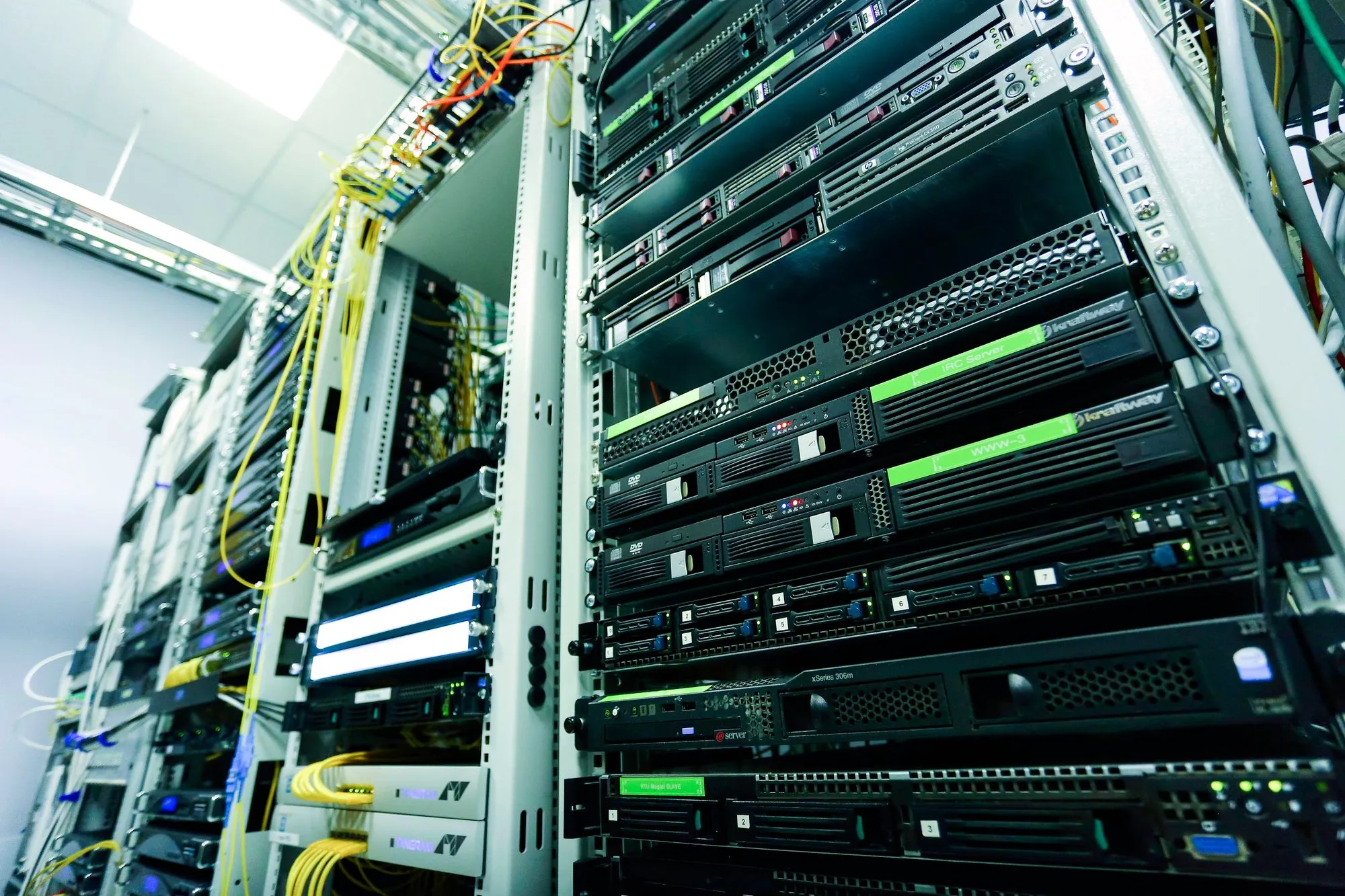 Photo: Sergei Starostin / Pexels
What runs, and where
Five containers on one internal network: the web UI (the only exposed port), the API with the rules engine and job runner, the inference service with the extraction model baked into the image, the database (PostgreSQL by default, or your SQL Server), and a content-addressed document volume. They deploy with Docker Compose on the virtualization environment you already run.
Reference sizing
16 vCPU, 64 GB RAM, 500 GB storage. No GPU. Per-bank volumes are well within CPU inference.
Database
PostgreSQL or SQL Server. Same schema, forward-only migrations, and two principals: an owner for migrations and a least-privilege account for the application.
Updates
Signed releases you apply on your own schedule. Preflight checks refuse to start on a schema mismatch. No unattended updates.
Exactly what leaves the bank
Three outbound connections, each configured in Settings, and each one can be switched off:
- jXchange to your core, for the boarding commit.
- SMTP to your relay, for escalations and sign-in links.
- A metering heartbeat to Bookend, because the platform is priced per closed loan and needs a count. It carries an install id, the version, the period, two integers (closed loans and document pages), coarse health, and the license key. Nothing else. The Metering screen shows the payload verbatim before and after it is sent.
There are no subprocessors for loan data, because loan data does not leave. The vendor-risk questionnaire gets shorter.
Air-gapped
Supported. Heartbeats are off, and a signed quarterly usage report, generated inside the deployment and carried out by your team, takes their place, with audit rights in the agreement. Air-gapped installs carry a pricing uplift for the self-reported metering.
“Our core is hosted by Jack Henry.”
Then the containers run in your network and reach the hosted core over jXchange the same way they would on-site. The documents stay with you either way. See the Jack Henry loan boarding guide.
Controls the software enforces
- Identity: Argon2id password hashing or email sign-in links, short-lived RS256 access tokens with rotating refresh tokens kept in memory and never in cookies, scoped API keys, and a record of every sign-in and key use.
- Roles and segregation: administrator, manager, closing specialist, boarding checker, and auditor (read-only). The person who stages a boarding or a wire can never be the one who approves it.
- Secrets at rest: SMTP and core credentials and the signing key are encrypted with a master key you hold.
- Append-only evidence: the application account can insert evidence events but cannot update or delete them. A nightly sweep verifies every loan’s chain and alerts on a break.
- Rate limits and headers: per-principal and per-address limits, login attempt limits, security headers, and a content security policy on the UI.
Why “usually”
On-premises is the default and the design center because loan documents deserve it. The same containers can run in a private cloud the bank already controls, under the same rules: the model stays with the documents, the outbound connections stay at three, and the heartbeat stays readable on screen. What Bookend does not offer is a multi-tenant SaaS for your closing packages.
The security and compliance detail (SOC 2 status stated plainly, the SR 11-7 validation pack, and change control) is on usebookend.com/security.
Questions
Deployment FAQ
Does loan data leave the bank?
No. Bookend ships as containers that run inside your network with the extraction model in the image. Documents, extracted terms, findings and the evidence chain live in your database and your document volume. The only outbound call to Bookend is a metering heartbeat carrying an install id, version, period, closed-loan count, page count, coarse health and the license key. The heartbeat is shown verbatim on screen, and air-gapped installs replace it with a signed quarterly report.
What does it take to run?
Reference sizing is 16 vCPU, 64 GB RAM and 500 GB of storage on your VMware or Hyper-V estate, with no GPU. PostgreSQL by default, or your SQL Server. Signed releases are pulled by your team on your own change-control schedule. The platform never updates itself.
Our core is hosted by Jack Henry. Does on-prem still apply?
Yes. The containers run in your network and reach the hosted core over jXchange the same way they would on-site. Loan documents stay in your network either way.
Is this AI? How is it explainable to examiners?
A model does one narrow job: it classifies documents and locates fields, inside the container. Whether two terms agree is decided by deterministic, versioned rules with documented tolerances, so a result is reproducible on the same input and can be explained to an auditor. Every signed release ships with a validation pack (test sets, accuracy by field type, known failure modes, change history) for the bank’s SR 11-7 model inventory, sized for a community bank.